

When most people think about children’s health in their everyday lives, they likely picture paediatricians, multivitamins, or playground safety. The changing climate isn’t often considered.
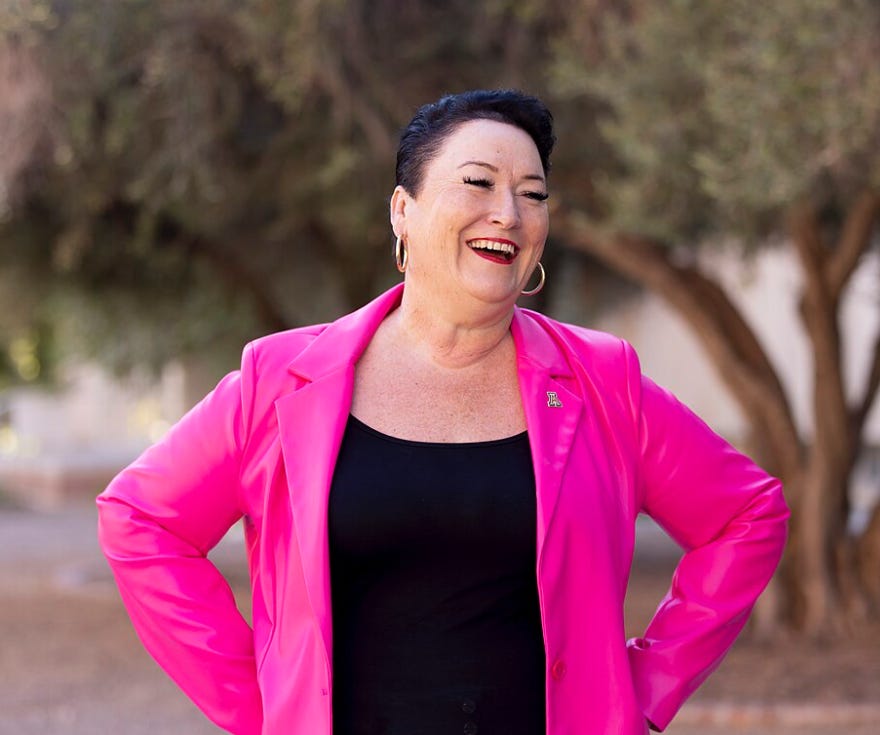
Dr Joellen Russell, however, is working to change this - and she is undoubtedly making waves. From being a Super Bowl social media sensation, to shaping the minds of the student population, Joellen is educating and advocating for children’s environmental health far and wide.
I was lucky enough to get to speak with Dr. Russell about all things oceanography, climate, and kids’ health. Her passion, enthusiasm and expertise was hugely inspiring.
The Ocean Doctor from the Arctic Circle
Dr. Russell grew up about 30 miles north of the Arctic Circle, where the sea was both neighbor and teacher. It embodies a vast, icy belt circling Antarctica, the least-visited, most mysterious part of our planet.
Living in a small village during her early years, she recounts walking to school with her brother, both armed with a flashlight to guide them in pitch black Arctic mornings and evenings. As a child, she saw vast sheets of ice drifting across the water, both dazzling and daunting. When the weather would change, she wondered - where did they go? What happened to the ice? The stories told to her by her elders, about the permanence of this icy climate, was different to what she was witnessing herself. It was this curiosity that set her on a path to a career in oceanography and climate science.
Fast forward a few decades: she’s now a Distinguished Professor at the University of Arizona, leading massive climate modeling efforts and heading the Southern Ocean Carbon and Climate Observations and Modeling (SOCCOM) project - a global collaboration using robotic floats to track how the ocean absorbs heat and carbon. Joellen speaks with passion and pride about her work; “as a climate scientist, I get to work on the most exciting and challenging issue of our time, one that affects every person on the planet.”
Her career reads like a mix of adventure novel and science fiction: polar expeditions, AI-powered floats drifting beneath Antarctic storms, supercomputers simulating ocean winds.
From Ocean Currents to Asthma Rates
At first glance, the Southern Ocean seems a million miles away from the nearest pediatric clinic. But Dr. Russell’s work has made it impossible to ignore the connection.
The ocean acts like Earth’s lungs, absorbing 90% of the excess heat and a huge portion of the carbon dioxide that humans emit. When those “lungs” get stressed, the whole system suffers. More trapped heat means hotter cities, dirtier air, longer allergy seasons, and worsening conditions for children - especially those with asthma, heart disease, or limited access to clean air and water.
In short: what happens in the deep sea doesn’t stay there.
The same wind shifts that Dr. Russell models in Antarctica influence wildfire smoke in the U.S., crop yields in Africa, and the intensity of hurricanes battering coastal schools. Her work helps scientists and policymakers understand and predict how a disrupted ocean translates into direct risks for children’s physical and mental health.
Living in Arizona with her two boys and her partner, she describes how the scorching weather is impacting her own community. With temperatures reaching over 100 degrees F, burn wards become full and hospitals struggle to care for those suffering with the impacts of extreme heat. It’s not only the intensity of the heat, but the duration too, that makes it particularly debilitating. Public pools are so full that they have to turn people away, already having reached their capacities. More shade structures and splash pads are having to be built to provide some temporary relief to the baking community.
The impact is no less pressing on children, either. If anything, Dr. Russell highlights, it’s worse, because children themselves aren’t aware of the signs of heat stress and exhaustion. Not only can their bodies not regulate heat like adults can, but they haven’t yet learned how to protect themselves or understand when they are suffering severely and need intervention. This puts even more pressure on their caregivers to be extremely vigilant and proactive.
Climate Change, Pediatric Medicine, and the Missing Link
Russell’s work illustrates how increasingly often, climate science and healthcare are talking about the same crisis. Doctors see the symptoms: heat exhaustion, respiratory illness, trauma from floods or storms.Climate scientists like Russell see the mechanism: the buildup of greenhouse gases and the shifting circulation of the global ocean.
Her research has quietly reshaped how medical and public health experts approach prevention. You can’t truly protect children from asthma, malnutrition, or displacement without understanding the environmental systems that drive those outcomes. And thanks to oceanographers like Russell, those systems are finally visible - measurable, predictable, actionable.
Science Moms
This vital information should be available to everyone, Dr. Russell tells me, so that’s exactly what she has set out to make a reality. Dr. Russell is one of the co-founders of Science Moms, a group of climate scientists who are also mothers, working to make climate science more relatable and emotionally resonant for everyone.
During the COVID 19 pandemic, this incredible group of women came together and began sharing their climate knowledge online. This group makes their knowledge accessible and actionable, driven by the values that we all hold - protecting our children’s futures. The Science Moms share what’s happening with our changing climate, why it poses a risk, and what we can do about it.
Joellen recounts the early days of science moms, where the women were somewhat hesitant. Operating in largely male dominated science sectors, and with little social media knowledge and experience, they were unsure about taking on an online presence. How would their reputation as scientists be impacted by posting online? Would being seen as a ‘mother’ negatively impact their careers?
Little did they know that there was no cause to worry; with over 106k followers on Instagram, and even a recent ad in the SuperBowl, the Science Moms have clearly been well received!
What underlies their success? Perhaps it’s the warm maternal presence that makes their videos relatable and non confrontational. Perhaps it’s the way in which knowledge is presented in an understandable way, bridging the gap between expertise and action. Perhaps it’s because the underlying motivations of their videos isn’t a marketing practice or personal gain - it’s to protect kids’ health and ensure they can lead the fulfilling lives that they deserve.
So what can we do? How can we make changes in our everyday lives to cope with the climate crisis?
Joellen shares three key steps:
Swap! Make climate healthy swaps wherever you can. Swap from fossil fuel power to electrified non fossil fuelled power. Swap from buying brand new clothes and items to using more vintage and thrifred goods. Everything helps!
Share! Climate friendly tips, practices and tricks; share them all through your community.
Speak up! Call your elected officials, speak to your local representatives, even community leaders and community groups. There is power in voicing your concerns about climate change and making yourself heard!
Joellen tells me how we know that people are prepared to take positive action - there is clear evidence we are on the right track. Despite having a similar sized economy to China, the U.S. produces significantly less emissions, and this continues to reduce. All of this is motivated by choice, not legislation, because we continue to see progress despite the administration rolling back policies on climate protection.
It’s up to us to keep this moving in the right direction. Staying informed, aware and taking climate friendly action where possible can help to protect children’s health - now and in their future. If in doubt, ask (a science) mom!
Written by Rebecca Barry