
Invisible Risks: Indoor Air Quality, Radon and Children’s Health in Tribal Communities
An interview with Mansel Nelson, Institute for Tribal Environmental Professionals (ITEP)

Indoor air quality is something most people rarely think about - until it affects their health. For many tribal communities across the United States, however, poor indoor air quality, including radon exposure, is a long-standing, often invisible challenge that intersects with housing, history, and children’s health.
Mansel Nelson, a trainer and program specialist with the Institute for Tribal Environmental Professionals (ITEP) at Northern Arizona University, has spent years working alongside tribes to address these issues through education, training, and community-driven solutions. I got the chance to speak with him and learn more about the relationship between indoor air quality (IAQ), tribal communities and children’s health.
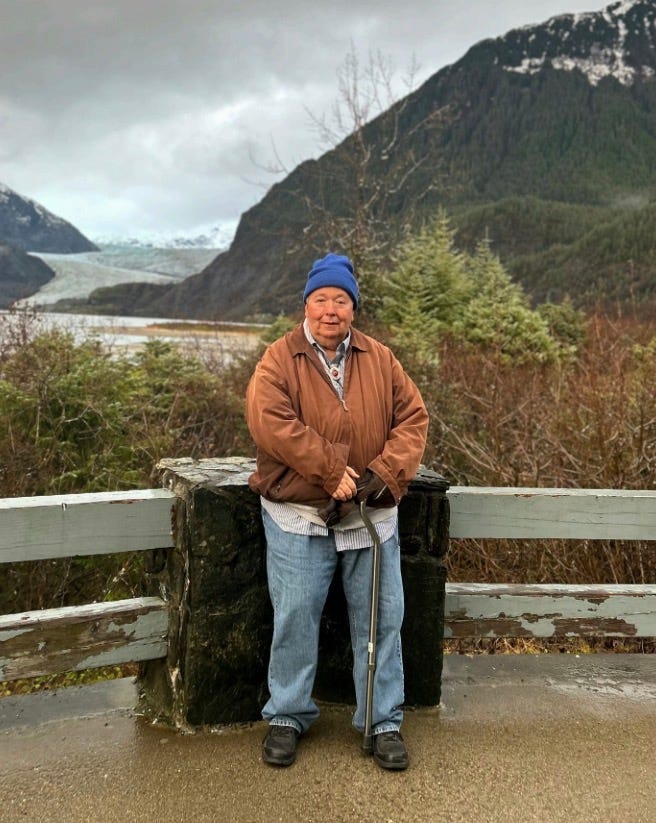
Mansel Nelson
This was especially fitting considering that January is National Radon Action Month. This time of year offers us an important opportunity to raise awareness about radon and the risks it poses, particularly in communities with a legacy of uranium mining and limited resources for testing and mitigation.
Supporting Tribal Communities from the Ground Up
ITEP is hosted by Northern Arizona University but works directly with tribes across the country. The organization has a staff of around 40 people and offers a wide spectrum of services designed to support tribal environmental initiatives.
“Our role is not to tell tribes what to do - they are sovereign nations,” Mansel explains. “We’re here to support them with training, education, and capacity building so they can make informed decisions that fit their own priorities.”
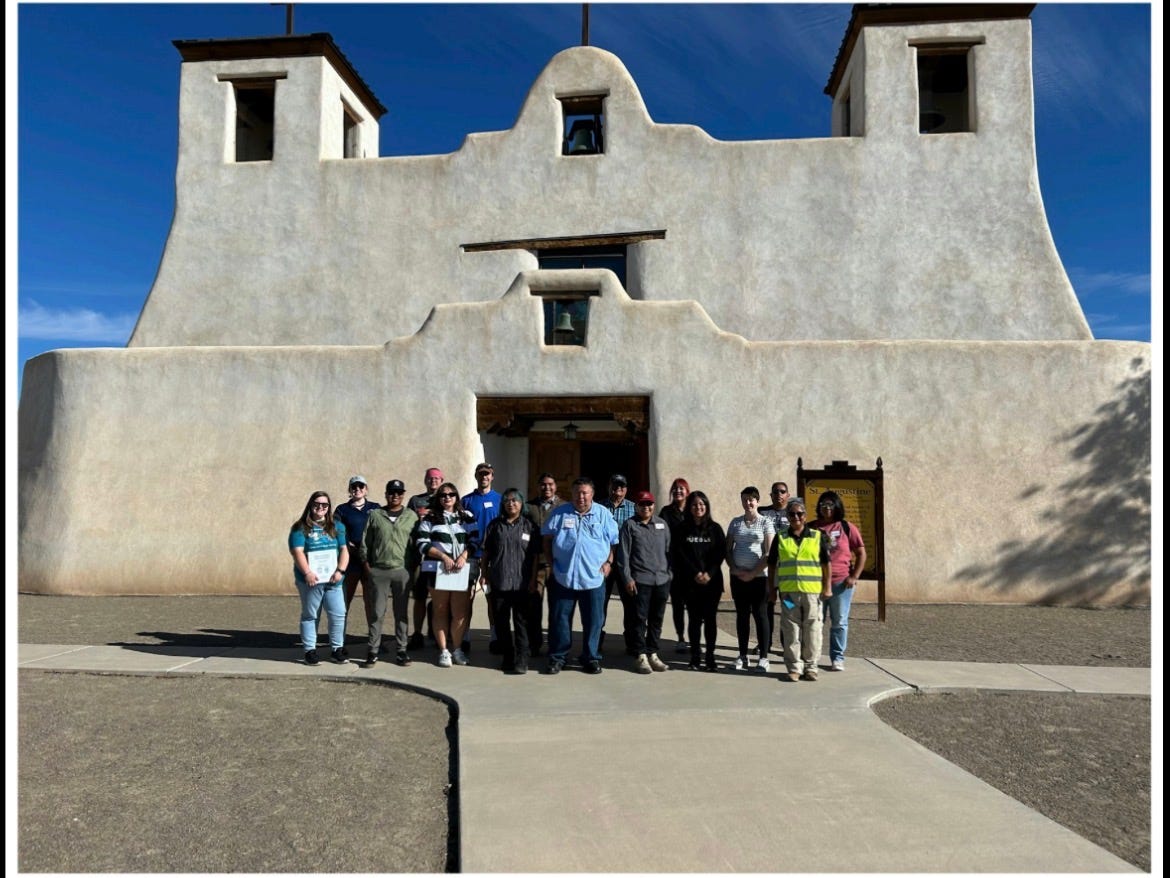
Church Radon Mitigation: Pueblo of Isleta, New Mexico, ITEP staff worked with the pueblo to investigate radon issues with Church. The Pueblo staff were able to mitigate the radon using the building HVAC system. Participants in an Indoor Air Quality training held at the Pueblo of Isleta, toured the building.
Mansel works primarily within ITEP’s internship program and as a trainer for tribal staff, delivering more than 14 different courses each year, both online and in person. He is also closely involved in youth programming, including partnerships with the Eco Healthy Child Care team here at Children’s Environmental Health Network (CEHN).
What Is Radon and Why Is It Dangerous?
Radon is a naturally occurring radioactive gas that forms when uranium breaks down in soil and rock. It is invisible, odorless, and tasteless, meaning people can be exposed without ever knowing it is present. Radon enters buildings through cracks in foundations, floors, and walls, accumulating indoors, especially in homes, schools, and childcare facilities.
Long-term exposure to elevated radon levels is the second leading cause of lung cancer in the United States and the leading cause among non-smokers. When radon gas is inhaled, radioactive particles damage lung tissue over time, increasing cancer risk. Because symptoms may not appear for decades, radon is often described as a silent or invisible health threat.
“Radon is one of those issues where people don’t see immediate impacts,” Mansel says. “That makes it really hard to keep it front and center.”
Radon and Tribal Communities: A Legacy of Uranium Mining
For several tribal nations, radon risk is closely tied to the historical legacy of uranium mining. More uranium in the soil increases the likelihood of radon coming up through building foundations.
“The Navajo Nation alone had over 500 uranium mines,” Nelson says. “Uranium is the precursor to radon, so that history still affects people today.”
Other tribes, such as the Spokane Tribe in Washington State, have also been impacted by uranium mining. While some tribes have developed radon programs, many are still in the early stages of awareness, testing, and mitigation.
Mansel reports on how community responses to radon vary widely. At Taos Pueblo in New Mexico, tribal staff were trained and successfully tested and mitigated homes for several years. There was successful prevention of exposure which likely benefitted the health of the community today. However, when trained staff moved on to other jobs, the program slowed because there was no one to replace them. “Now the community are interested in getting testing going again,” Nelson says, underscoring a common challenge: sustaining programs over time when there are competing or arguably more immediate priorities.
Policy Changes and Preparedness Gaps
Federal policy changes may soon increase attention to radon. Beginning in 2026, the U.S. Department of Housing and Urban Development (HUD) will require radon testing and mitigation in buildings constructed with HUD funds.
“This will dramatically increase the demand for testing,” Mansel says. “But many tribes aren’t prepared for that, nor financially and practically equipped to take mitigation action”.
While EPA State Indoor Radon Grant (SIRG) funding has helped some communities with testing and education, radon continues to compete with many other urgent priorities.
“Radon is an issue in tribal communities,” Mansel says, “but it’s usually not at the top of the list.”
Indoor Air Quality: A More Immediate Health Crisis
While radon remains a serious concern, indoor air quality more broadly is often the most pressing issue for tribal communities - particularly for children.
“Asthma rates in tribal communities are almost double that of non-tribal communities,” Mansel says. “Indoor air quality is probably a big driver of that.”
Because most air pollution indoors is invisible, it can be difficult to motivate action. Common contributors to poor IAQ include:
● smoking indoors
● wood smoke from heating stoves
● mold caused by excess moisture
● poor ventilation leading to more concentrated air pollution
● the use of harsh or heavily scented cleaning products
There have been successes in improving IAQ. A notable shift occurred when the Navajo Nation passed a law banning smoking in casinos; while these environments didn’t have children in them, the ban raised awareness around IAQ in general. Plus, many schools have improved ventilation and cleaning practices, often directly due to ITEP programs and education. Homes, however, remain a significant challenge, likely due to lack of awareness and unknown harms around some long-standing practices like cooking and heating.
Why Children Are at Greater Risk
Children are especially vulnerable to radon and poor indoor air quality. Their lungs are still developing, they breathe more air relative to their body size, and they spend more time indoors, particularly in homes and childcare settings.
“Daycares and homes are critical spaces,” Mansel says. “That’s where testing and prevention really matter.”
Higher rates of asthma, flu, RSV, and other respiratory illnesses are common in tribal communities - and poorly ventilated indoor environments increase transmission. Keeping kids safe from a huge range of airborne illnesses and health issues means paying close attention to IAQ and putting health focused parameters in place.
Prevention Is Key
Because radon and indoor air pollutants cause harm over long periods, prevention is the most effective protection. Testing buildings, improving ventilation, reducing indoor pollution sources, and addressing moisture and mold can significantly reduce long-term health risks.
“Once lung damage happens, you can’t reverse it,” Mansel says. “That’s why prevention is so important.”
National Radon Action Month campaigns this month underscore this message, encouraging testing and awareness before health impacts occur.
Training, Capacity, and Optimism
There are 574 federally recognized tribes in the United States, yet in an average year Mansel only trains about 40 people on Indoor Air Quality. His own understandable limited capacity, combined with a lack of community engagement in some tribal areas and an overall lack of funding and resources prevents the expansion of his programs.
“Public health isn’t always a government priority,” Mansel says. “But continuing to educate at the community level will yield change in the long run.”
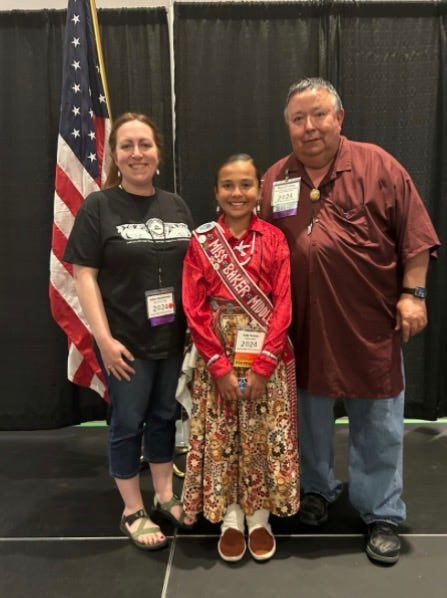
Nala Rain Nelson, Navajo, Mansel’s granddaughter, presented at a National Conference about her project testing radon in the Navajo community of Kayenta, AZ. Johna Boulafentis, Nez Perce Tribe, works with the New Perce tribe on radon issues.
We know that healthy indoor environments are vital for children’s health. This means areas free from or with very low levels of indoor pollution and less exposure to radon. Continuing the education and encouragement of communities and elected officials to prioritize this remains one of our key missions.
Thank you, Mansel, for your insight and expertise!
Written by Rebecca Barry
A hopeful story of quiet heroism in the midst of political turmoil.