

Dr. Jerome A. Paulson is a distinguished pediatrician and environmental health advocate whose career has been dedicated to safeguarding children’s health from environmental hazards. Living in Virginia with his wife, Dr. Paulson is part of a large and loving family, where he proudly watches his three grandchildren flourish. He is also an avid glass sculpture collector and connoisseur, with a vast array of unique and captivating pieces from around the world.
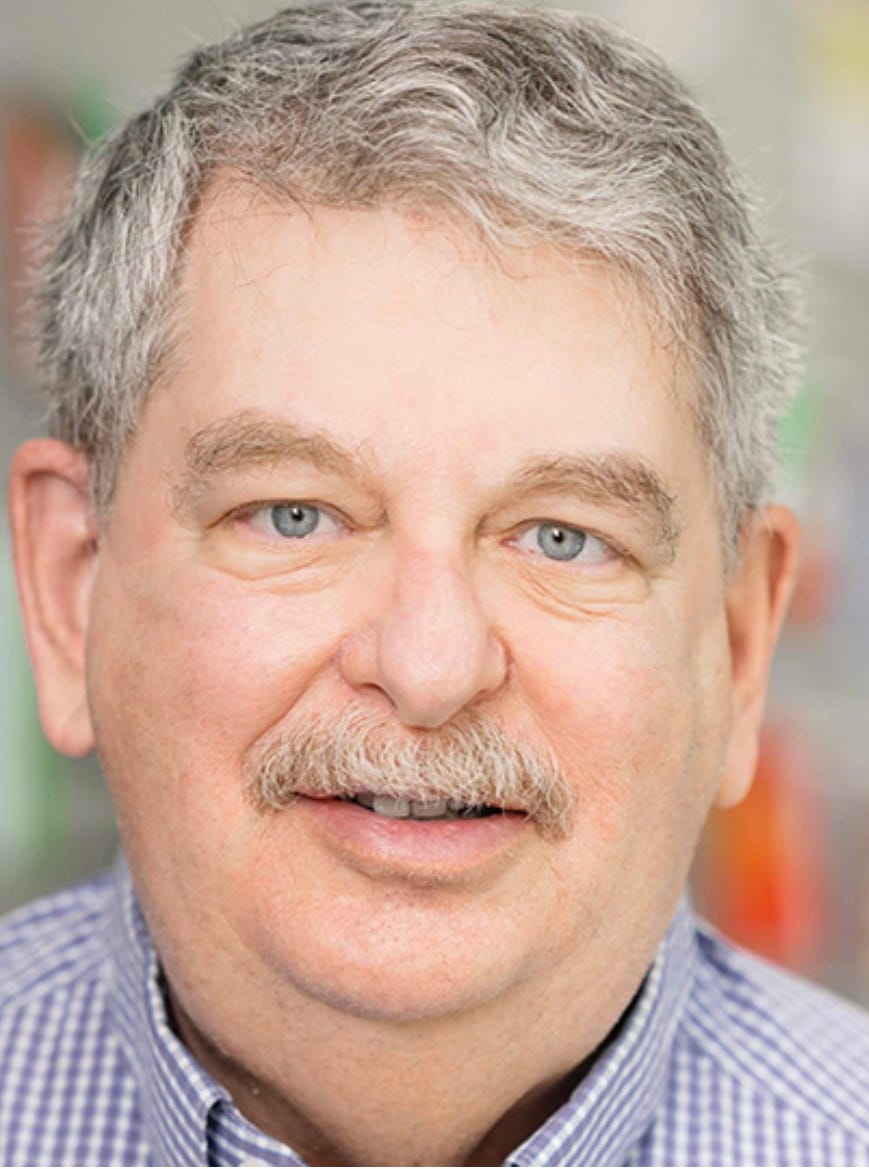
I was lucky enough to speak with Dr. Paulson about his work in a recent interview (October 2025). We discussed his work, achievements, and the future in the field of children’s environmental health.
As a founding member of Virginia Clinicians for Climate Action (VCCA), and a recent recipient of the VCCA Lifetime Achievement Award, he has been instrumental in integrating climate considerations into healthcare practices and policies.
Dr. Paulson’s path began in Maryland, where he earned a degree in biochemistry before pursuing medicine at Duke University. After his pediatric training at Johns Hopkins and Sinai Hospital, he worked in pediatric care for several years before diving further into policy work. Later, he then joined the faculty at The George Washington University and Children’s National Medical Center.
Following this, he helped establish the Mid-Atlantic Center for Children’s Health & the Environment, a lifeline for families and healthcare providers dealing with environmental exposures. For several years Dr. Paulson was involved in the management of the Pediatric Environmental Health Specialty Units (PEHSUs) for the eastern United States. He is very proud that this network still functions as a resource for providers, public health personnel and families confronting potential health impacts of toxins and pollution.
Dr. Paulson worked hard to span the gaps between medicine, environmental sciences, and the policy apparatus involved in environmental protection. He began walking the halls of Congress and federal agencies, and advising the U.S. Environmental Protection Agency as part of its Children’s Health Protection Advisory Committee. His mission was clear: children’s health should never be an afterthought in environmental policy.
Dr Paulson told me that a huge barrier in children’s environmental health is that many people still think of children as ‘little adults,’ and therefore assume that their bodies will react the same way to environmental harms as adults do. This is simply not the case - children’s bodies are much more vulnerable to damage and harm and they aren’t developed enough to have the same defense and protection mechanisms as adults. Getting people to understand this is crucial in ensuring that children get the protection they need.
A Founding Voice in Climate Medicine
As climate change began reshaping public health, Dr. Paulson saw the writing on the wall - and the thermometer. Rising asthma rates, heat-related illnesses, vector-borne diseases. Far from abstract scientific trends, these issues were showing up in his waiting room.
That realization led him to help found Virginia Clinicians for Climate Action (VCCA), a coalition of healthcare professionals united by one belief: protecting the climate is protecting our patients.
Through VCCA, Dr. Paulson became a tireless advocate for climate justice in Virginia. He worked alongside community partners like the Virginia Chapter of the NAACP, the Virginia League of Conservation Voters alongside other environmental and justice organizations in Virginia, emphasizing how the burdens of pollution and climate disruption fall hardest on those with the fewest resources. His efforts helped train a new generation of clinicians to speak confidently and compassionately about climate and health.
While his work has had incredible success, this hasn’t been without continuous struggle. Dr. Paulson described how polluting industries, like those of large oil and gas companies, are prepared to obscure, hide and overcomplicate the data that shows the negative impacts of their activity on public health and the environment. In order to protect their profit, they are often willing to put public health on the line, and try to ridicule climate and health scientists and sway the public opinion. This makes the work of individuals like Dr. Paulson much more difficult, because they have to fight misinformation and structural barriers, which takes time away from helping children.
He shares how it feels that it is only in the last 12 months that clinicians in this field have started noticing and addressing their own and their colleagues’ mental health. Working in this current time is understandably having a heavy impact on their wellbeing. Dr. Paulson reflected on a guiding phrase, “you are not responsible for solving a problem, but you are not free to ignore the problem.” In this context, while each individual should work to resolve climate issues we face in the capacity they can, we must remember that the burden isn’t solely on one pair of shoulders. We must unite all of our resources - political science, geographical knowledge, public health, community action - to truly maximize our potential for success and a healthy future.
A Lasting Legacy
Today, Dr. Paulson’s influence continues to ripple outward. His research, his advocacy, and his mentorship have shaped how pediatricians across the country understand their role in a changing world.
Dr. Paulson has garnered a number of awards and accolades, including being elected to the American Pediatric Society on the basis of his contributions to children’s health, and in receiving the Carol Strobel Memorial Award from CEHN. His proudest moments, however, are less about awards and more about impact. Every child breathing cleaner air, every parent empowered to create a safer home, every policymaker who listens - that’s his true legacy.
I asked Dr Paulson for advice he would give to people wanting to help and create healthier environments.
“Look to whatever strength you might have; the strength of a nurse is different to that of a librarian or a schoolteacher. Figure out what portion of this huge problem it is that you want to work on. Is it regenerative agriculture? Is it protecting pollinators, working on nature preservation, or reducing air pollution? Find your niche. Find partners with whom you can work alongside in that area. Know that the goal is progress, not to solve the problem yourself. It’s only when people lean on each other and collaborate that we can see movement and progress.”
I also asked Dr. Paulson on what he envisions for the future; how can we optimize our society and prepare for a turbulent environmental and political climate?
His insight was particularly thoughtful and inspiring - instead of rallying to rebuild what we have lost or what is falling apart, let’s take this opportunity to think about if we actually want to resurrect old structures, old ways of operating, or in fact create something new.
He explains how if we don’t start preparing, planning and taking thoughtful action now, then when the time for change does come, we will be ill equipped and under prepared to cope. So, let’s start now to think about the better society we want to engineer, one that prioritizes our health, our wellbeing, our environment, and our children. Then, when the time to take action comes, we will be ready.
Thank you, Dr Paulson, for your work and for your insights!
Written by Rebecca Barry